


Martini
An iconic cocktail with history and style

When you say Martini, most people imagine an elegant glass with a crystal-clear drink and an olive at the bottom. This iconic cocktail has gained popularity around the world thanks to its simple but refined taste and association with movie legends such as James Bond.
But what is a Martini really? How is it prepared, and why does it hold such a privileged position among classic cocktails? In this article, we will look not only at its history and various variations, but also at how to serve it correctly so that every sip is a perfect experience.
What is Martini?
Martini is one of the most famous cocktails in the world, characterized by its simple yet refined composition. It is traditionally made with gin and dry vermouth, with the ratio of these ingredients affecting the final taste—more vermouth means a smoother and more aromatic version, while more gin gives it a stronger character. The drink is served chilled, often garnished with an olive or twisted lemon peel.
Thanks to its clean taste and unmistakable appearance, Martini has become a favorite drink of many celebrities and has appeared in countless films and books. Whether you enjoy it in its classic form or in one of its modern variations, it always remains a cocktail that perfectly combines simplicity with elegance.
The history of Martini and its development
The exact origin of the Martini cocktail is shrouded in mystery, and there are several theories about its creation. One of the most famous claims that The drink originated in California in the 19th century. , where it was invented by bartender Julio Richelieu for a passenger traveling to the city of Martinez. Another version says that Martini is a shortened version of the cocktail “Martinez,” which was served in New York as early as the mid-19th century .
Whatever his path to fame may have been, one thing is certain—Martini gradually evolved and gained popularity. The original recipe with sweet vermouth was transformed into a dry Martini, where gin predominates and only a minimum of vermouth is used. During the 20th century, this cocktail became a symbol of luxury, elegance, and taste.
Pop culture, especially the James Bond film series, played a significant role in Martini’s fame. In his stories, Agent 007 regularly orders a Vesper Martini, a special variant containing gin, vodka, and Lillet Blanc, shaken, not stirred. This detail has become iconic and has contributed to the popularization of Martini among the general public.
Today, there are countless versions of this legendary cocktail, but its essence—simplicity, style, and refined taste—remains unchanged. Today, there are countless versions of this legendary cocktail, but its essence—simplicity, style, and refined taste—remains unchanged.
Types of Martini and their variations
Over the years, the Martini has undergone many modifications and variations, some of which have become as famous as the original recipe. Each variation offers a different taste and serving style, so both lovers of the classic and those who like to experiment will find something to their liking.
Dry Martini – the purest classic
This is the most traditional and well-known version of Martini. It contains gin and only a very small amount of dry vermouth – the less vermouth, the “drier” the drink. It is most often served with an olive or lemon peel. Dry Martini is a symbol of elegance and sophistication, and it is this variant that is most often associated with the silver screen and luxury bars.
Dirty Martini – a spicy twist
This variation adds olive juice to the classic recipe, giving the cocktail a more distinctive and slightly salty taste. Dirty Martini is the ideal choice for those who enjoy a more intense and less traditional taste experience. It is usually garnished with two or three olives skewered on a toothpick.
Vesper Martini – James Bond style
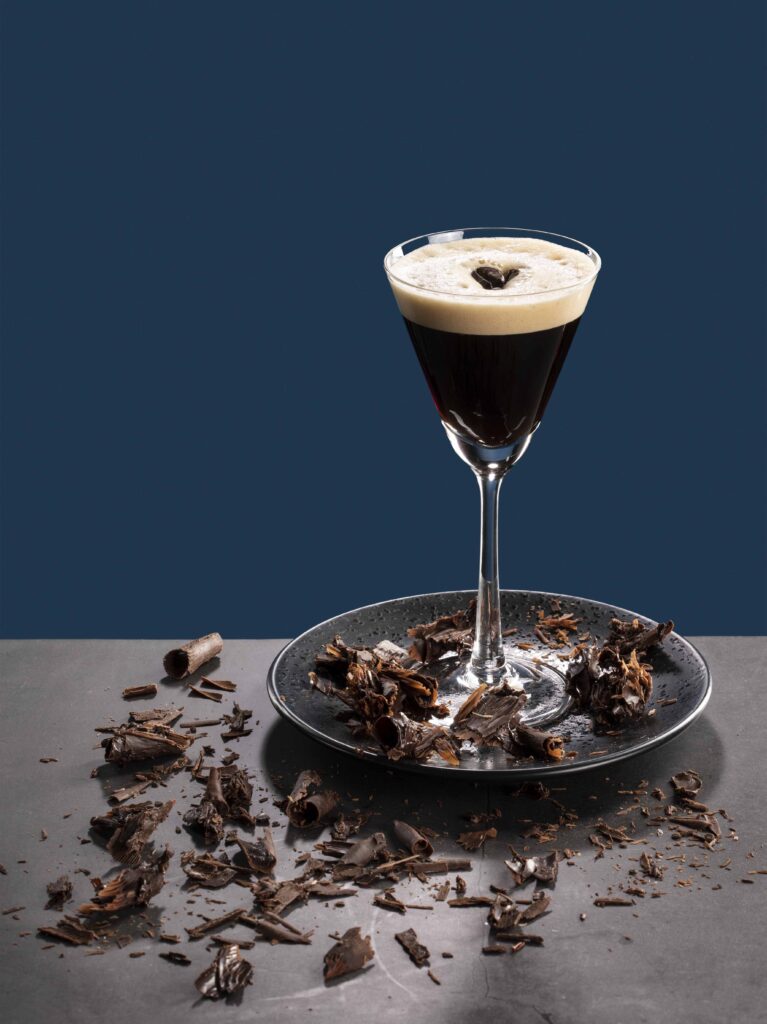
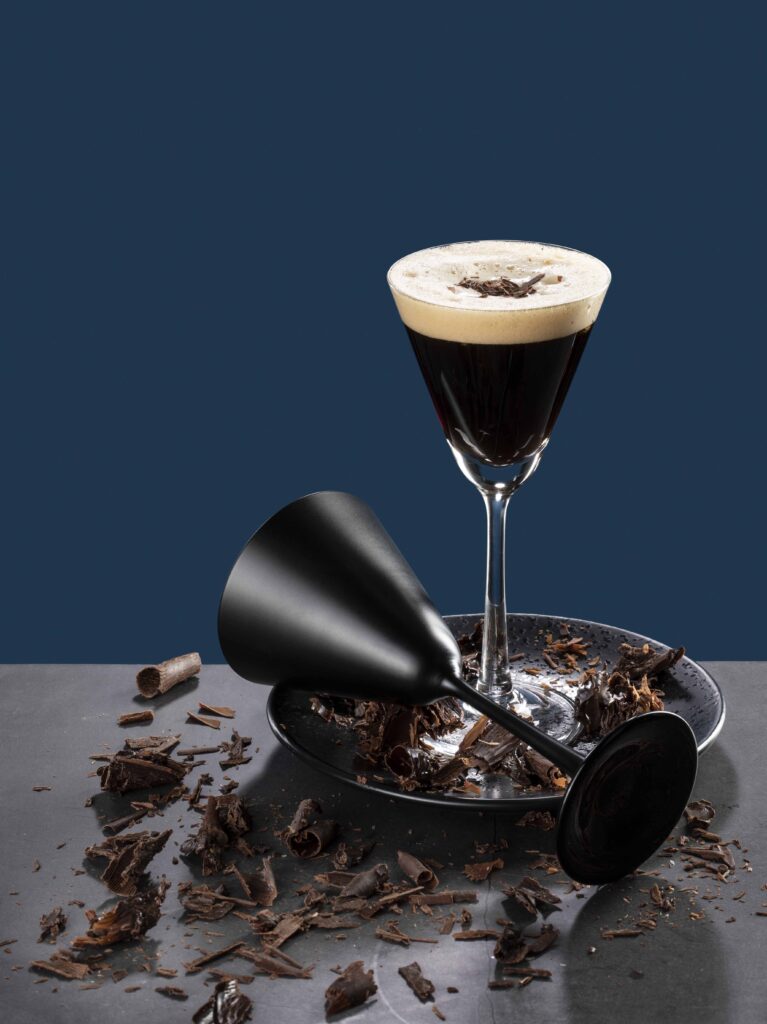
Unlike other variations, the Espresso Martini has little in common with the original recipe, as it contains neither gin nor vermouth. Instead, it combines vodka, coffee liqueur (e.g., Kahlúa), and freshly brewed espresso. The result is a delicious, energizing cocktail with rich foam that has gained immense popularity, especially among coffee lovers and evening drinkers.
Espresso Martini – moderní klasika
A special variation that first appeared in Ian Fleming’s novel Casino Royale. The Vesper Martini combines gin, vodka, and Lillet Blanc, a special aromatized wine. Unlike the classic Martini, it is shaken, not stirred, giving the drink a smoother texture. This cocktail is stronger than the classic Martini, and its iconic status has ensured its immortality.
Other modern variations
In addition to these well-known versions, there are countless creative variations of the Martini that reflect current trends in mixology. Among the most popular are:
- Gibson Martini – similar to a Dry Martini, but served with pickled onions instead of olives.
- French Martini – a sweeter version with vodka, Chambord (black raspberry liqueur), and pineapple juice.
- Chocolate Martini – a dessert version with chocolate liqueur, cream, and vodka.
How to serve a Martini correctly?
The perfect Martini is not just about the right proportions of ingredients, but also about the right serving. Not only do temperature and mixing method play a key role, but also the choice of glass, which affects the overall drinking experience.
Choosing the right glass
Martini is traditionally served in a Martini glass, which is characterized by its wide conical shape and long stem. This design is not only aesthetic but also practical—the wide rim allows the cocktail’s aroma to unfold, while the long stem prevents the drink from warming up in your hand. This keeps the Martini cold longer and preserves its refreshing taste.
The right temperature and preparation technique
Martini should be as cold as possible, so it is important to chill the glass before serving – either leave it in the freezer for a few minutes or fill it with ice and let it stand before pouring the drink into it. The cocktail itself is prepared either by mixing it in a mixing glass with ice or, in the case of a Vesper Martini, by shaking it in a shaker. The drink is then strained into a chilled glass and garnished with an olive or lemon peel.
By following these simple but important steps, every Martini will be served in the best possible way—ice cold, elegant, and perfectly balanced.

The best ways to prepare a Martini
The perfect Martini depends not only on the right choice of ingredients, but also on how it is prepared. Every detail—from the ratio of gin to vermouth to the quality of the ice—affects the final taste and texture of the cocktail.
Shaken or stirred?
The famous question “Shaken or stirred?” divides Martini lovers into two camps. Traditionally, Martini is mixed in a mixing glass with ice and then strained through a bar strainer into a chilled glass. This method ensures a smooth and delicate consistency.
On the other hand, shaking in a shaker, as preferred by James Bond, creates a cocktail with a slightly cloudy texture and a more aerated taste. However, shaking dilutes the drink more quickly with ice, which can affect the intensity of the flavor. Stirring is therefore recommended for a classic Dry Martini, while shaking is suitable for variations such as the Vesper Martini.
The right ratio of gin and vermouth
The alcohol ratio plays a crucial role in the taste of a Martini. As a general rule:
- Classic Martini – the ratio of gin to vermouth is 5:1, which means a more pronounced gin flavor.
- Extra Dry Martini – contains only a small amount of vermouth (sometimes just a few drops).
- Wet Martini – the ratio is more balanced, which softens the taste of the cocktail.
Experimenting with the ratio of gin and vermouth allows you to tailor your Martini to your personal preferences.
Ice quality and beverage temperature
Ice plays a key role in preparing a Martini. Using large, high-quality ice cubes ensures that the cocktail dilutes more slowly and is better chilled. An ice crusher or small ice chips can dilute the drink too quickly and change its structure.
Tip: Before serving, chill not only the cocktail but also the glass so that the Martini stays refreshing for as long as possible.
The perfect finale – decoration and serving
A classic Martini is served either with an olive, which adds a salty touch, or with a twisted lemon peel, which brings out the citrus notes of the gin. For a Dirty Martini, olive juice is used, which adds another layer of flavor to the cocktail.
Whichever option you choose, it is important to maintain precision in preparation. The right technique, quality ingredients, and elegant serving will make a Martini not just a drink, but a real experience.
Why is Martini a timeless classic?
Martini is not just a cocktail—it is a symbol of elegance, refined taste, and timelessness. Its simple yet perfectly balanced composition has endured for generations and remains one of the most iconic drinks in the world. Whether you enjoy it in its classic dry form, with olive juice in a Dirty Martini, or in a modern variation such as an Espresso Martini, it always offers a unique taste experience.
It is precisely Martini’s versatility that has made it so popular around the world. Everyone can find their ideal ratio of ingredients, serving method, and garnish. Don’t be afraid to experiment with different versions and discover new nuances of this legendary cocktail.
Whether you sip it in a luxurious bar or in the comfort of your own home, it always carries an air of sophistication. So why not enjoy one today and discover the magic of this iconic cocktail?